
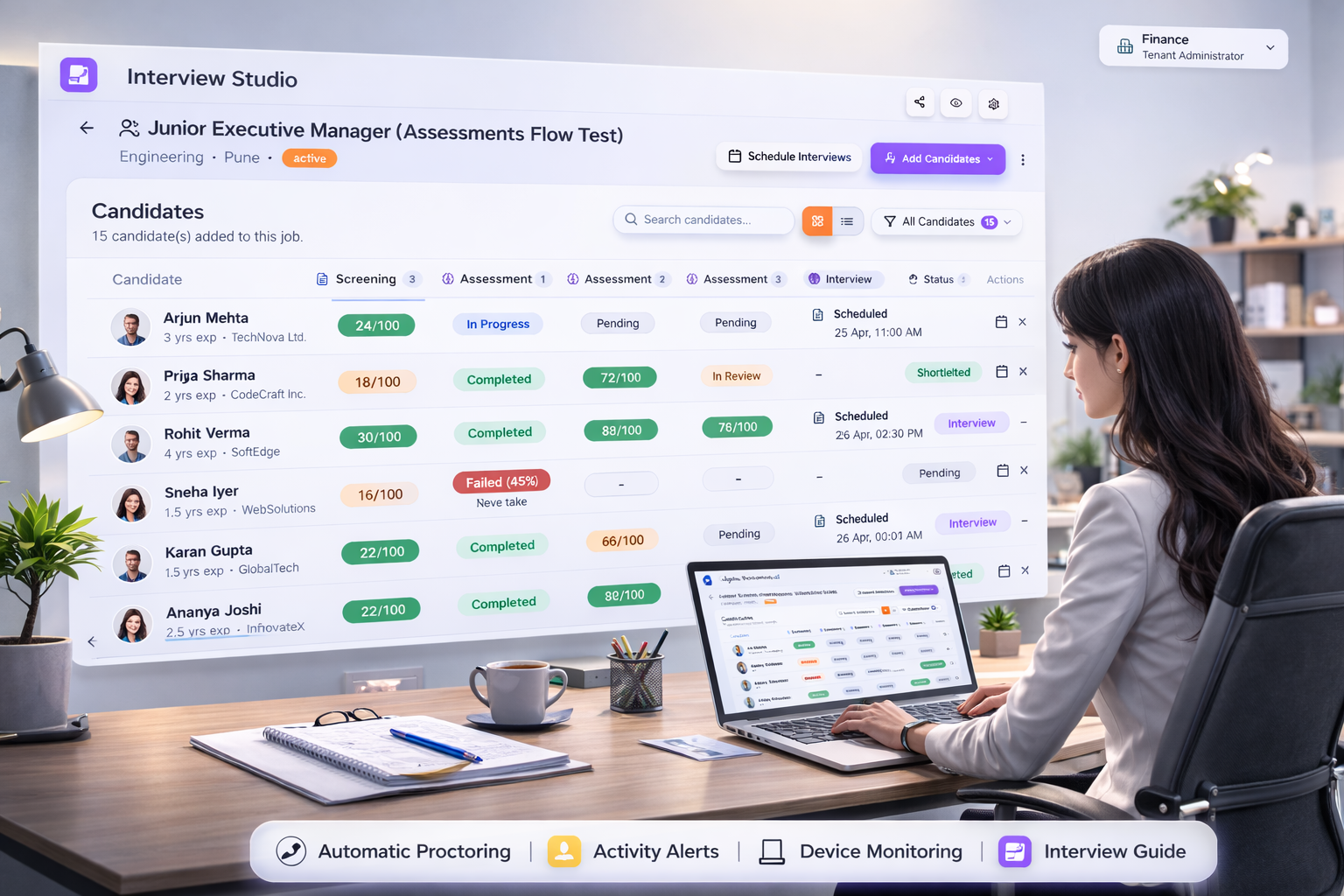
Picture a Manila hiring team filling the same technical role for a Filipino candidate and a foreign national. Both need a fair skills review. Only one may need a route involving an Alien Employment Permit and the appropriate work visa.
When that distinction appears late, recruiters chase documents after interviews, onboarding dates move, and candidates receive conflicting instructions. A better workflow identifies the route early while keeping the actual role evidence consistent for everyone.
“Local context should change the route—not lower the standard of evidence.”
Start with the route, not the paperwork pile
The initial screen should capture only what the team needs to choose the next step. Professional licensing, work location, employment type and foreign-national status are routing facts. They should create a visible task for an authorized person, not become an unexplained score.
Filipino candidate
Role and employment-path review
Foreign national
AEP and work-visa review path
Both paths
The same role evidence standard
Requirements can change by role and circumstance. DOLE, Bureau of Immigration, tax, payroll and benefit obligations should be confirmed by qualified local advisers.
The five-stage field guide
Read the profile consistently
Stage 1 of 5Surface role fit and the routing facts that matter.
Skills, relevant experience, location, availability and professional requirements are reviewed in one structure. Where nationality or role requirements change the path, the workflow raises a review task rather than making a silent decision.
Choose the employment route
Stage 2 of 5Separate regular, probationary and project-based paths.
Candidates answer a short, relevant set of questions. Foreign-national cases can be routed for AEP and 9(g) review, while local employment paths retain the milestones and supporting information the team needs.
Assess the actual role
Stage 3 of 5Use role-aligned evidence before consuming interview time.
Governed questions and practical tasks show how candidates apply their knowledge. Results, review notes and exceptions return to the same candidate journey for a consistent hand-off.
Run a prepared interview
Stage 4 of 5Let interviewers start where the evidence becomes interesting.
The panel receives the candidate history, tested strengths and areas requiring clarification. Interview notes remain attached to the stage instead of disappearing into private documents.
Verify, offer and onboard
Stage 5 of 5Turn the final decision into an accountable checklist.
The responsible team reviews identity and role requirements, prepares the employment documentation, and tracks applicable statutory-registration or foreign-worker steps after acceptance.
What happens after “yes”
Offer acceptance is not the end of the workflow. It is the point where ownership must become clearest. A local employee may need the organisation’s normal payroll and statutory-benefit process. A foreign national may require permit and visa milestones before the agreed start.
- Confirm whether the role and candidate path require professional licensing or foreign-worker review.
- Track the applicable AEP and 9(g) work-visa process through authorized reviewers.
- Prepare the correct employment documents and probationary or project milestones for the chosen path.
- Route applicable SSS, PhilHealth, Pag-IBIG and BIR onboarding work to the responsible team.
- Keep the candidate informed with one status and one clear next action.

What the team sees differently
One candidate timeline
Screening answers, assessment evidence, interviews and onboarding tasks remain attached to the same journey.
Country-aware routing
Local and foreign-national requirements become explicit paths instead of comments someone may miss.
Prepared reviewers
Each person receives the evidence and open questions needed for their stage, without repeating earlier work.
Manageable drive days
Teams can focus on stalled, flagged or waiting candidates while routine progress continues.
The result is not a machine making employment decisions. It is a hiring team that can see the route, the evidence and the next obligation without rebuilding the story at every hand-off. ■
Plan the workflow